Energy price cap to rise 26% in January. How much will your electricity bill go up?
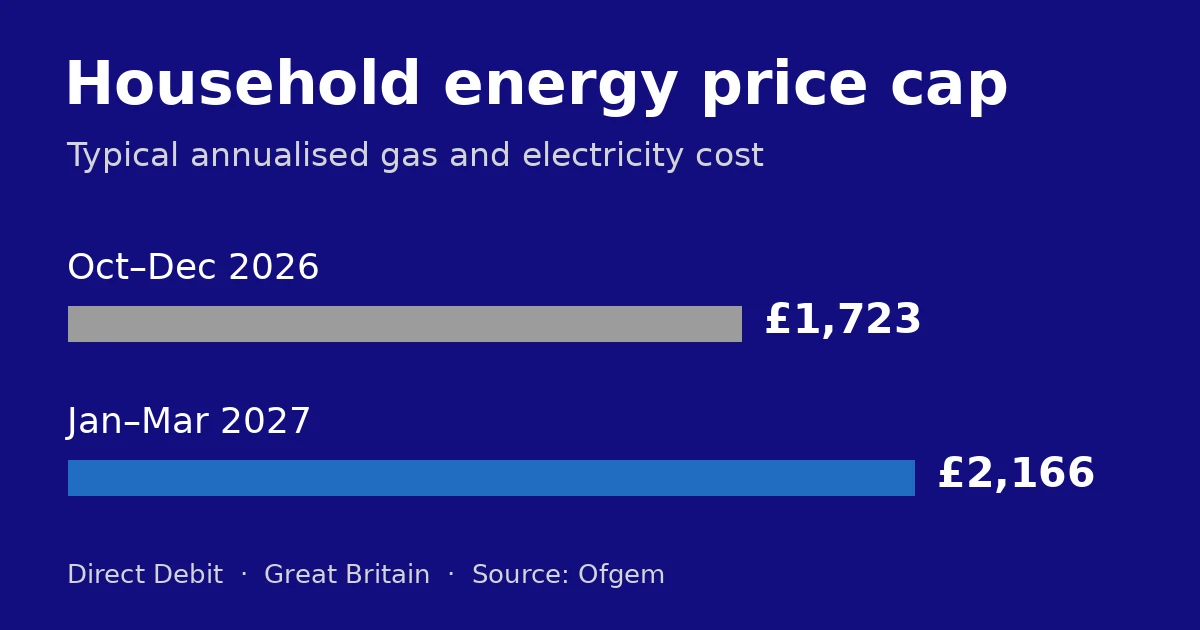
From 1 January 2027, Ofgem’s new cap takes the annualised cost for a typical dual-fuel household paying by Direct Debit from £1,723 to £2,166. That £443 difference assumes the winter rates lasted a full year. The announcement covers January to March, and gas prices are rising faster than electricity prices.
Will my electricity bill rise by 26%?
Your change depends on your tariff and how much electricity you use. The cap covers domestic default tariffs in England, Scotland and Wales. If you’re on a fixed deal, check its end date. If you’re looking at a bill for business premises, check the rates and renewal terms in your commercial contract.
Work it out from your supplier’s notice
Find your old and new electricity unit rates in pence per kilowatt-hour (kWh), then find both daily standing charges. Compare rates on the same VAT basis. Use last winter’s electricity consumption if you have it, particularly if you heat your home with electricity.
Say you use 300 kWh in January. A unit rate increase of 5p adds £15 to that month’s electricity cost. If the standing charge also rises by 2p a day, add another 62p for January’s 31 days. At the same usage, the increase would be £15.62. Substitute the actual changes from your notice.
What could rooftop solar change?
Solar affects the electricity you buy from the grid. Think about a washing machine running at midday and an oven running after dark. Panels can supply the first while the sun is out. Covering the second would require stored energy or grid electricity. Your daily standing charge still applies while you’re connected.
When comparing quotes, ask how much generation the installer expects you to use at home, how much you would export and what import and export rates they assumed. Ask for a winter estimate as well as the annual figure.